Being included in an environment does not necessarily mean having opportunities to discover every part of who you are.
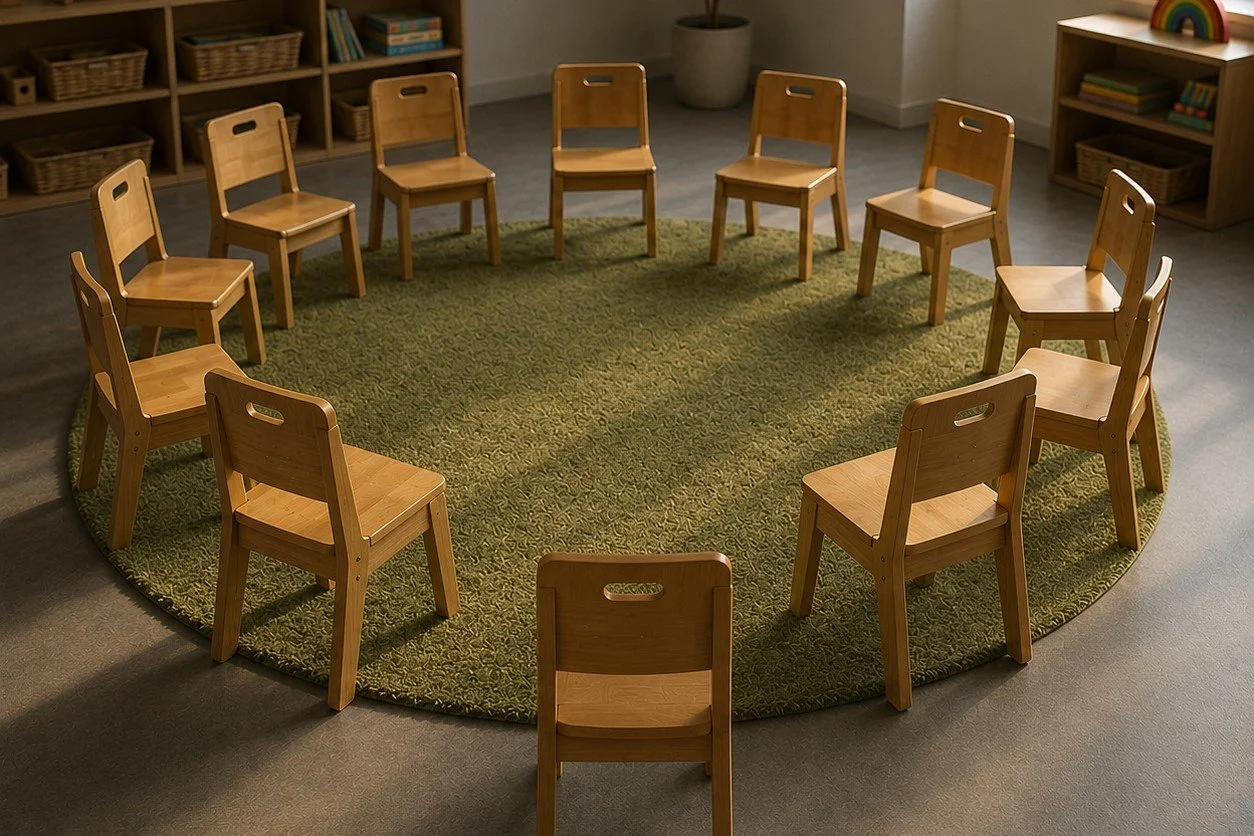
A space is created to support Deaf children.
The activities are planned. Professionals are involved. Families are encouraged to participate.
But whose experiences shape the environment?
Growing up, I attended primary school surrounded mainly by hearing children. There were only two Deaf pupils in my class: myself and my best friend.
I communicated through spoken language, had hearing friends and didn't particularly think of myself as different.
I felt part of the world around me.
But I had no Deaf adult role models, and I didn't learn BSL until I was 11, when I attended Deaf secondary school.
That was also when I first met a Deaf adult and began discovering my Deaf identity.
The experience changed how I understood myself.
It also brought anger.
Why hadn't I been introduced to BSL earlier? Why hadn't I encountered Deaf adults growing up? Why had I spent so many years without knowing more about a language and community that were also part of who I was?
For a while, I rejected my hearing friendships and turned towards the Deaf world.
Looking back, I regret that decision. My hearing friends were not responsible for the opportunities I hadn't been given.
I came to understand that discovering my Deaf identity did not mean I had to reject my connections with hearing people.
Both could be part of my life.
Years later, becoming a Deaf mother raising a Deaf child gave me another perspective on how educational environments and support services are designed.
Alongside my wider observations within the Deaf community, these experiences have made me question something important.
Can a Deaf child feel included in an environment while still having limited opportunities to discover Deaf language, culture and identity?
My primary school was a predominantly hearing environment, rather than a service specifically designed for Deaf children. But the questions it left me with are relevant to spaces created specifically to support them.
Early-years services and educational settings can provide valuable support for language development, confidence, learning and relationships.
But supporting Deaf children involves more than making activities accessible.
It also means considering whose language, identity and experiences are reflected in those environments.
When activities are organised primarily around spoken English, signing opportunities are limited and Deaf adults are rarely present, what messages might children receive about which ways of communicating and belonging are considered normal?
These messages do not always need to be spoken.
They can emerge through everyday experiences, the people children encounter and the opportunities available to them.
Not all Deaf children communicate in the same way. Some use BSL, some use spoken language, and others use both.
Hearing parents may also be learning BSL alongside their children, while professionals bring different forms of knowledge and expertise.
Those differences deserve recognition.
The issue is not that spoken language is wrong or that hearing professionals should have less involvement.
It is whether hearing experiences become the default within spaces intended to support Deaf children, leaving Deaf language, culture and identity as additional rather than integral parts of the environment.
There is also a difference between introducing Deaf culture and allowing Deaf experiences to shape how a service operates.
A Deaf role model visiting occasionally can offer something valuable.
But what opportunities do children have to build ongoing connections with Deaf adults and peers?
Are Deaf professionals involved in developing activities and making decisions, or are they invited into structures already established by others?
And when families are making decisions about communication and education, are they supported to understand the different possibilities available to their children?
These questions matter because children cannot explore opportunities they have never been given.
A Deaf child may feel happy, settled and included within a predominantly hearing environment. That experience should not be dismissed.
But feeling included does not necessarily mean every part of their identity has had the opportunity to develop.
Nor should discovering Deaf language and culture require rejecting hearing friendships or relationships.
Deaf children deserve opportunities to experience both Deaf and hearing communities, develop meaningful relationships and explore their identities without being expected to choose one world over another.
Organisations designing services for Deaf children should be prepared to examine whose knowledge informs their decisions, whose experiences are centred and what opportunities children may be missing.
A space designed for Deaf children should not simply accommodate their deafness. It should recognise the different possibilities of their language, identity, culture and belonging.
The question is not just whether Deaf children are included in the environments around them.
It is whether those environments give them meaningful opportunities to discover who they are and who they may become.
THE QUESTION
What opportunities might Deaf children miss when the environments designed to support them reflect predominantly hearing experiences rather than the full range of Deaf language, identity and culture?