Some workplace tasks appear straightforward until you consider what they require from the person doing them.
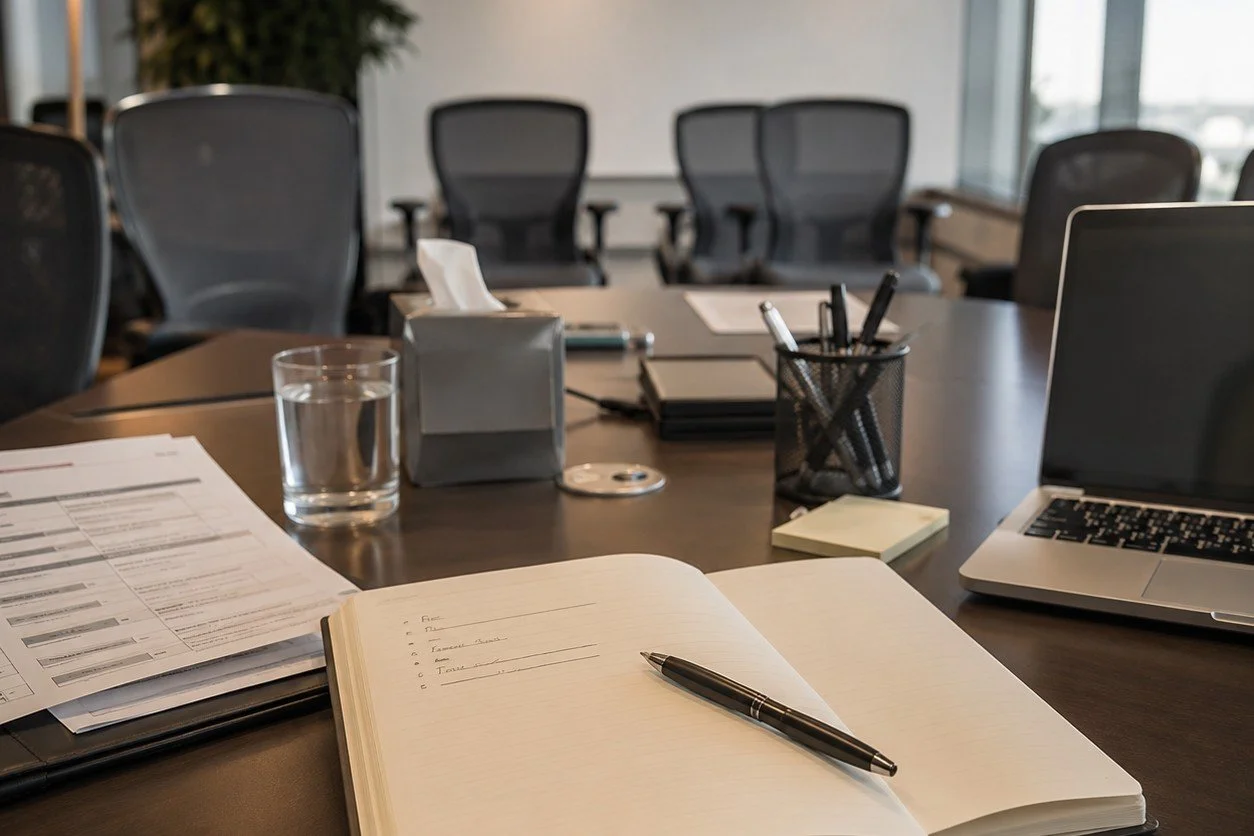
While working for a local authority, my line manager asked me to share minute-taking responsibilities with a colleague.
I raised concerns about how I would manage the task while following the meeting through a BSL interpreter, but my manager encouraged me to give it a try.
I did.
It didn't work.
I needed to watch the interpreter to follow the discussion, but taking minutes required me to look away to write. While I was recording information, the meeting continued, and I couldn't keep up with both.
My colleague ended up taking the minutes alone. Afterwards, she expressed frustration about having to handle the task herself, including typing up the notes properly and sending them to our manager for approval before sharing them with the team.
She already found minute-taking frustrating and frequently complained about having to do it.
The experience stayed with me because it raised a question about how workplaces decide which tasks are straightforward and who can reasonably be expected to carry them out.
Minute-taking involves more than writing down what people say. It requires following discussions, identifying important points, recording decisions and understanding what has been agreed.
For Deaf employees accessing meetings through BSL interpreters, there can be an additional challenge.
Following an interpreter requires visual attention. Writing notes also requires visual attention.
Trying to do both while a meeting continues can mean missing parts of the discussion, losing track of information or struggling to produce an accurate record.
For some Deaf employees, moving between BSL and written English can add another layer of processing. But even when English is someone's first language, the competing demands on visual attention remain.
This does not mean Deaf professionals cannot take minutes. Nor does it mean hearing employees find minute-taking easy.
The issue is how the task is assigned and whether the person's way of accessing the meeting has been properly considered.
In my experience, the difficulty was not only that I couldn't manage the task. It was that my concerns had been raised beforehand, yet the arrangement still depended on me trying to make it work.
When it didn't, the responsibility fell entirely to my colleague.
Neither of us benefited from that arrangement.
It raises a wider question about workplace inclusion.
When someone raises an access concern, is that concern treated as useful information for planning the work, or something they should overcome by trying harder?
There is nothing inherently wrong with encouraging employees to develop skills or try unfamiliar responsibilities.
But encouragement is not a substitute for considering whether the conditions allow someone to carry out the task effectively.
Employers can explore alternative minute-taking arrangements, appropriate support and different ways of documenting meetings. They can also consider how employees can participate fully rather than dividing their attention between accessing discussions and recording them.
The responsibility should not fall entirely on an employee to prove that a task is inaccessible before other arrangements are considered.
A task is not fairly allocated simply because everyone is expected to do it. Fairness also depends on whether people have the access and conditions needed to carry it out.
THE QUESTION
What happens when workplaces treat an employee's access concerns as something to overcome rather than information that should shape how work is organised?