Following a procedure is not the same as resolving the problem it was designed to address.
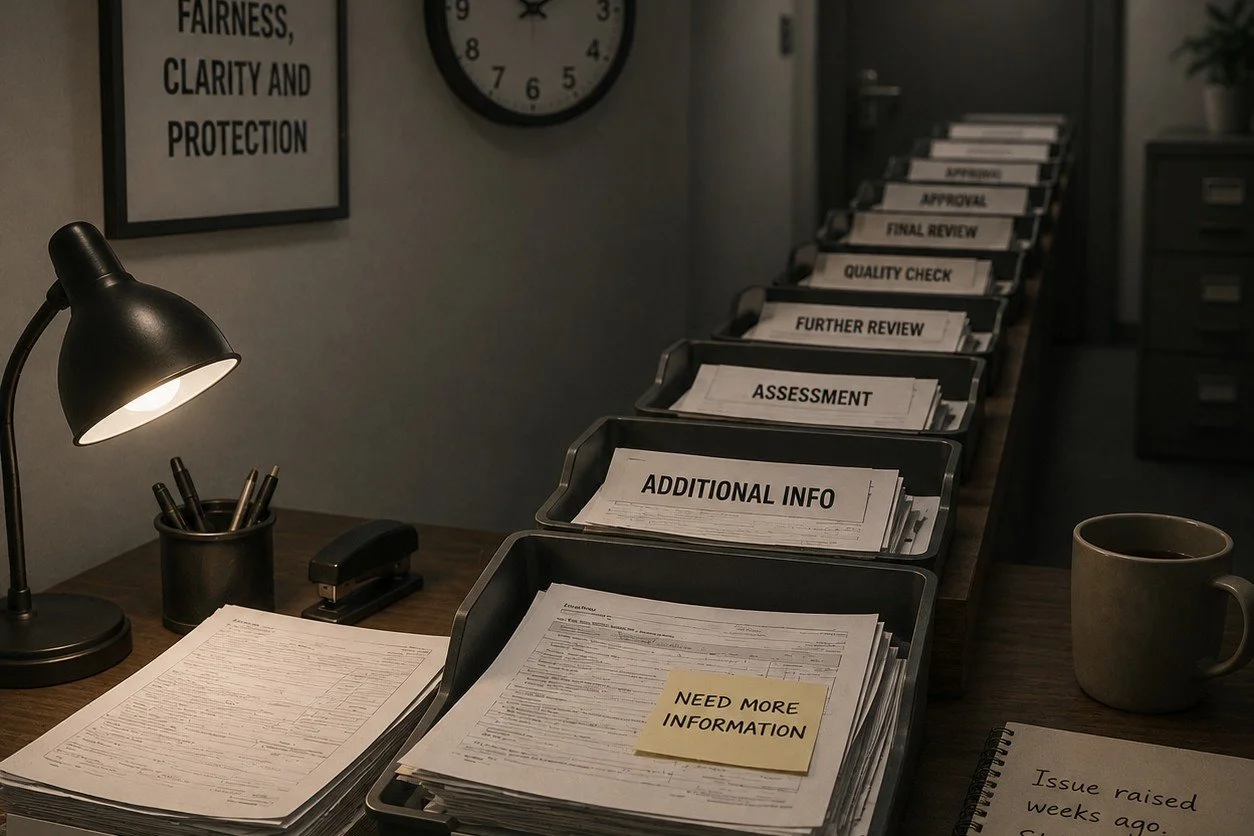
Sometimes the process becomes harder than the problem you are trying to solve.
I've experienced and observed how people can spend more energy navigating a system than addressing the issue that brought them there in the first place.
Processes are meant to create fairness, consistency, clarity and protection.
They can provide important safeguards for everyone involved.
But what happens when following the procedure becomes more important than understanding the problem?
A complaint is submitted.
More information is requested.
Evidence already provided is requested again, without a clear explanation.
Deadlines pass. Updates are limited. Another review begins.
Each stage may appear reasonable when considered separately.
But together, they can create additional uncertainty, exhaustion and distress.
This can happen across complaints procedures, workplace investigations, healthcare pathways and other systems intended to provide support or resolve concerns.
Not every delay is unreasonable.
Some situations require careful investigation, further evidence or independent review. Those steps can be necessary to ensure decisions are fair.
The concern arises when procedures become unnecessarily repetitive, inaccessible or prolonged, without clear explanations or meaningful progress.
The individual is expected to remain patient, respond to requests and meet deadlines.
Meanwhile, responsibility for chasing answers can fall on the very person seeking help.
For Deaf and disabled people, inaccessible communication can add another barrier to a process that is already difficult to navigate.
A person may find themselves having to challenge an access failure through a procedure that creates further access difficulties.
When does a process intended to address harm begin contributing to it?
There is also a difference between completing a procedure and demonstrating accountability.
An organisation may be able to show that every form was processed, every stage followed and every review completed.
But did anyone meaningfully address the original concern?
Was the person kept informed?
Were unnecessary barriers recognised and removed?
And if the process itself caused further difficulties, was that impact acknowledged?
These questions matter because procedural compliance does not automatically mean a process has been fair, accessible or effective.
Nor does an organisation need to intend harm for its procedures to have harmful consequences.
The challenge is to recognise when a process is no longer serving the purpose for which it was created.
Organisations should be willing to examine not only whether procedures were followed, but whether those procedures genuinely helped resolve the issue.
A process should protect fairness and accountability, not become a substitute for them.
When people leave a system more exhausted, distressed or disadvantaged than when they entered it, that experience deserves examination.
Because the measure of a process should not simply be whether it was completed.
It should also be whether it worked.
THE QUESTION
What happens when an organisation focuses on completing its procedures without examining whether those procedures are causing further harm?