When Process Becomes the Harm
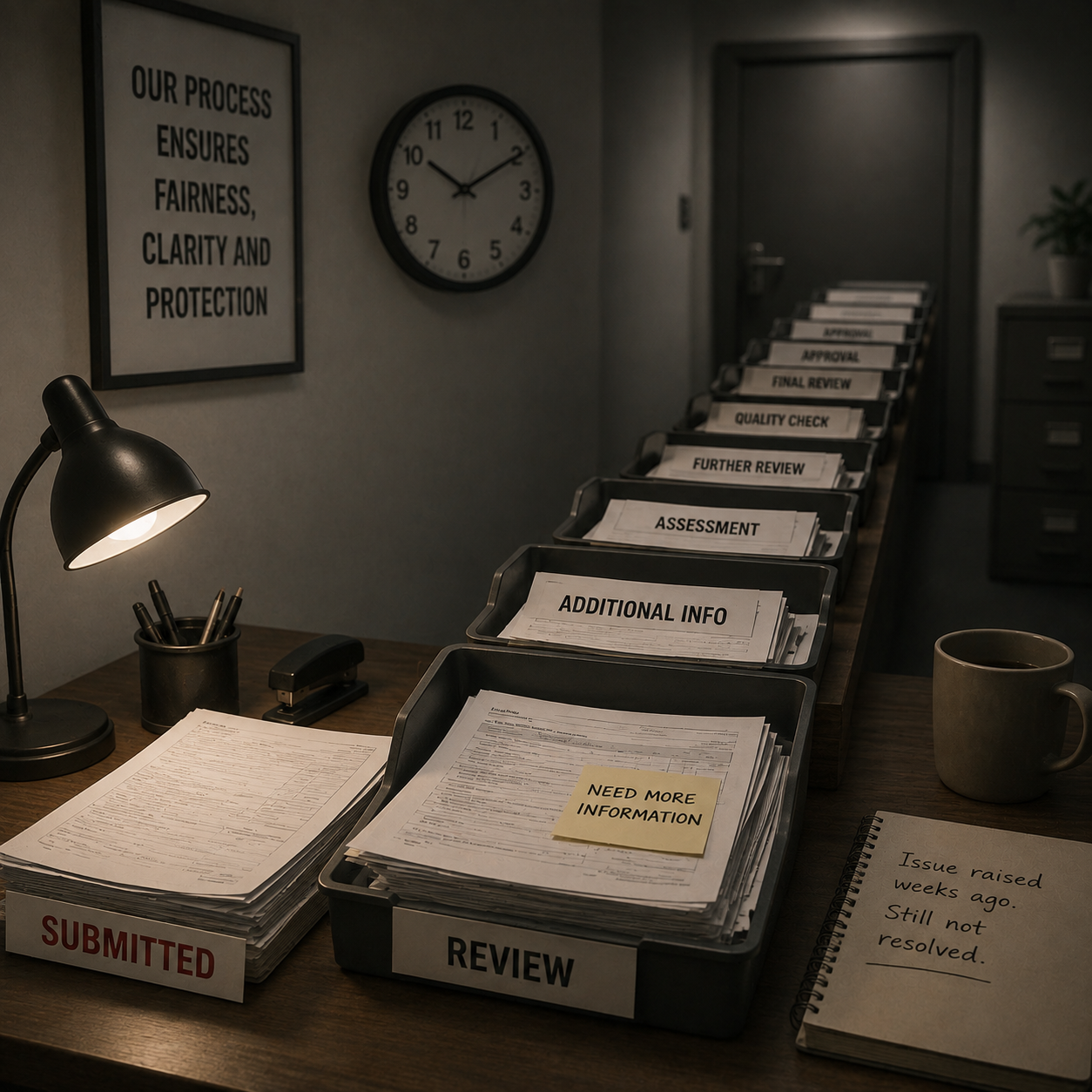
Sometimes the process becomes harder than the problem you are trying to solve.
I’ve seen how often people spend more energy navigating a system than addressing the issue that brought them there in the first place.
Processes are meant to create fairness, clarity, and protection.
But when institutions prioritise procedure over people, the process itself becomes the harm.
Forms are repeated instead of resolved.
Evidence is requested again instead of acknowledged.
Timelines stretch while urgency is dismissed.
Each step is presented as neutral.
Together, they create exhaustion.
In complaint systems, HR frameworks, and healthcare pathways, procedural compliance can replace meaningful accountability.
The burden shifts onto individuals to remain calm, patient, and compliant while the system moves slowly or inconsistently.
Harm is reframed as inconvenience.
Distress is treated as impatience.
This is not due process.
It is attrition.
When process replaces accountability, institutions can claim they are “following procedure” while people are breaking under it.
Harm does not need to be intentional to be real.
It only needs to be repeated and unaddressed.
Process should protect.
When it does not, it must be named.