When Professionalism Is Weaponised
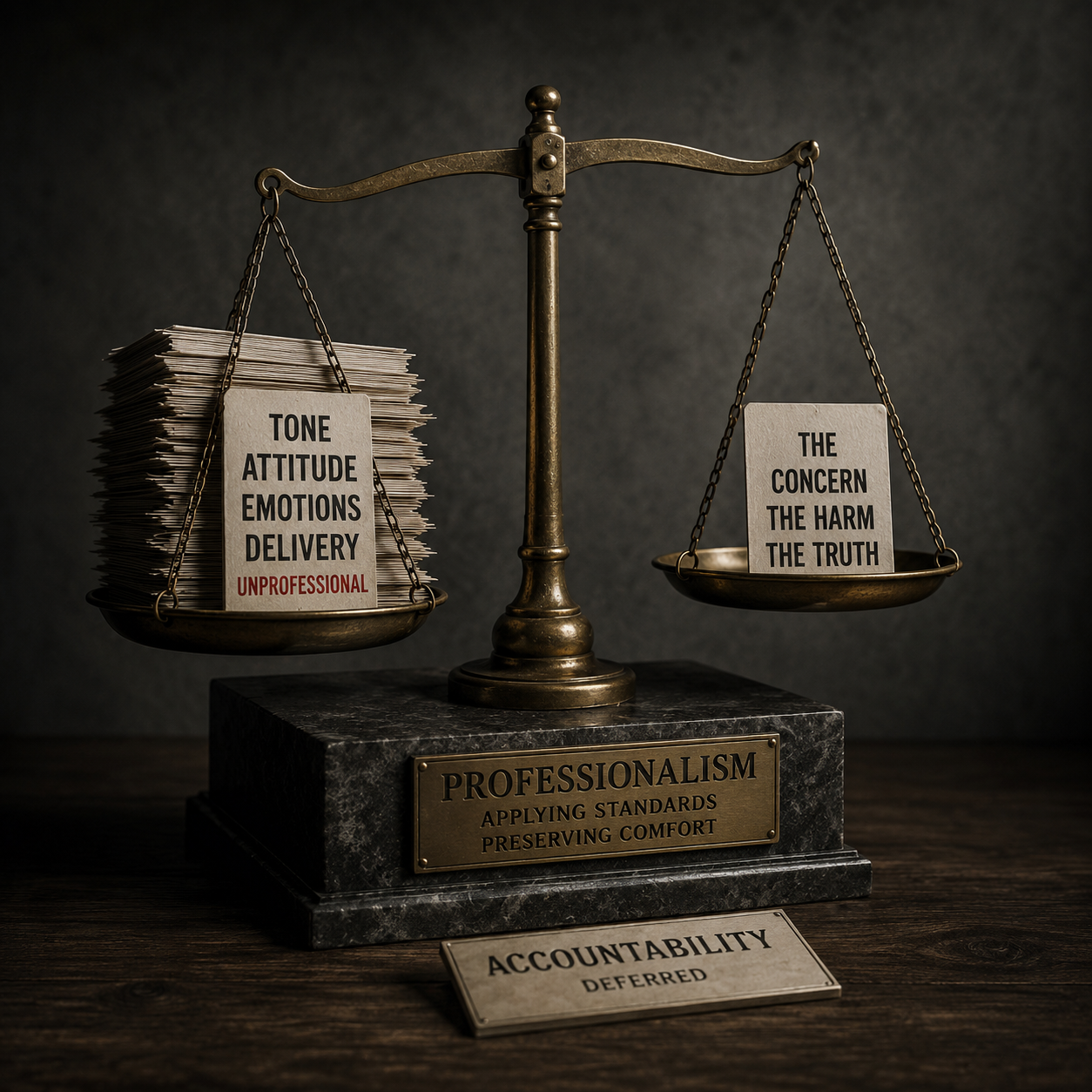
Sometimes the way a concern is expressed receives more scrutiny than the concern itself.
I’ve noticed how quickly conversations about harm can become conversations about tone.
Professionalism is meant to create safety, clarity, and respect.
When professionalism is selectively enforced, it stops being a standard and becomes a mechanism of control.
Professionalism is often presented as neutral, but its application rarely is.
Tone becomes the focus instead of harm.
Emotions are labelled unprofessional rather than understood in context.
Those with less institutional power are expected to remain calm, measured, and agreeable while raising serious concerns.
For Deaf and disabled people, professionalism can become a barrier to being heard.
Responses are judged not by their truth, but by how comfortably they are delivered.
Anger becomes disqualifying.
Distress becomes evidence of unreliability.
Meanwhile, the systems creating harm remain largely untouched.
Beneath this sits a power imbalance.
Professionalism often reflects workplace norms, policies, and expectations shaped by those already holding authority.
When those standards prioritise comfort over accountability, they protect existing structures rather than addressing the issues being raised.
When professionalism is weaponised, accountability shifts away from systems and onto individuals.
Access to credibility, participation, and safety becomes conditional on behaving acceptably within rules that were never shaped by those most affected.
Professionalism should never be a barrier to being heard.
When it becomes one, it may be protecting harm rather than addressing it.