Sometimes I think about all the things children already navigate at school.
Learning.
Friendships.
Confidence.
Finding their place.
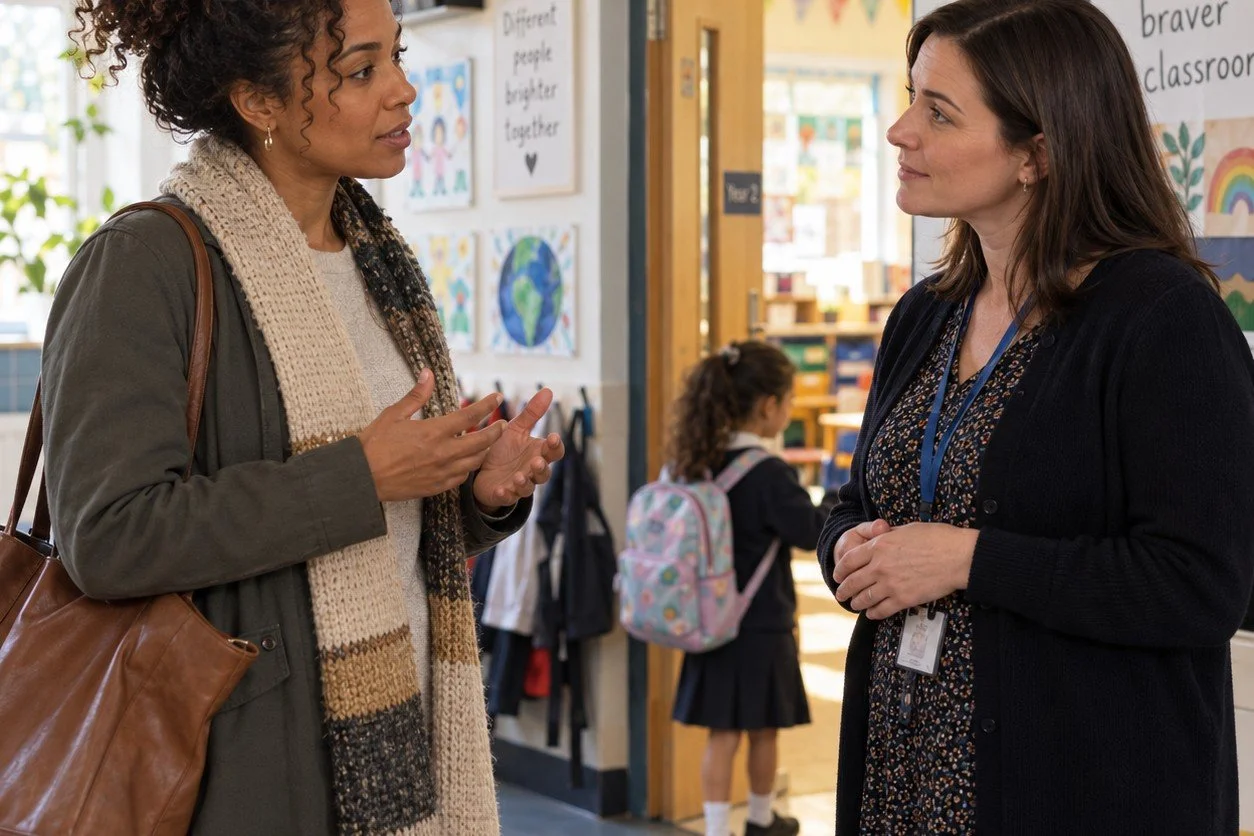
As a Deaf mum, I also think about what happens when a school needs to communicate with me and a child happens to be nearby.
A question at reception.
A message after class.
A conversation that hasn't been made accessible.
A child may offer to help.
They may want to make things easier.
But when adults repeatedly turn to a child to explain, relay or clarify information, a small favour can become an expectation.
Not every moment of helping is a burden.
But adults need to recognise when responsibility for communication is being passed to a child.
I want my children to be able to focus on their own experiences at school, rather than whether information has reached me or a conversation has been understood.
Schools should communicate directly with Deaf parents and arrange appropriate access when needed.
Children shouldn't have to fill those gaps.
School should be a place for learning, growing and belonging.
Not somewhere children are expected to make adult communication work.
REFLECTIVE QUESTION
What might schools overlook when a child's willingness to help becomes part of how adults communicate with Deaf parents?