When Audiology Is Built Around Hearing Norms
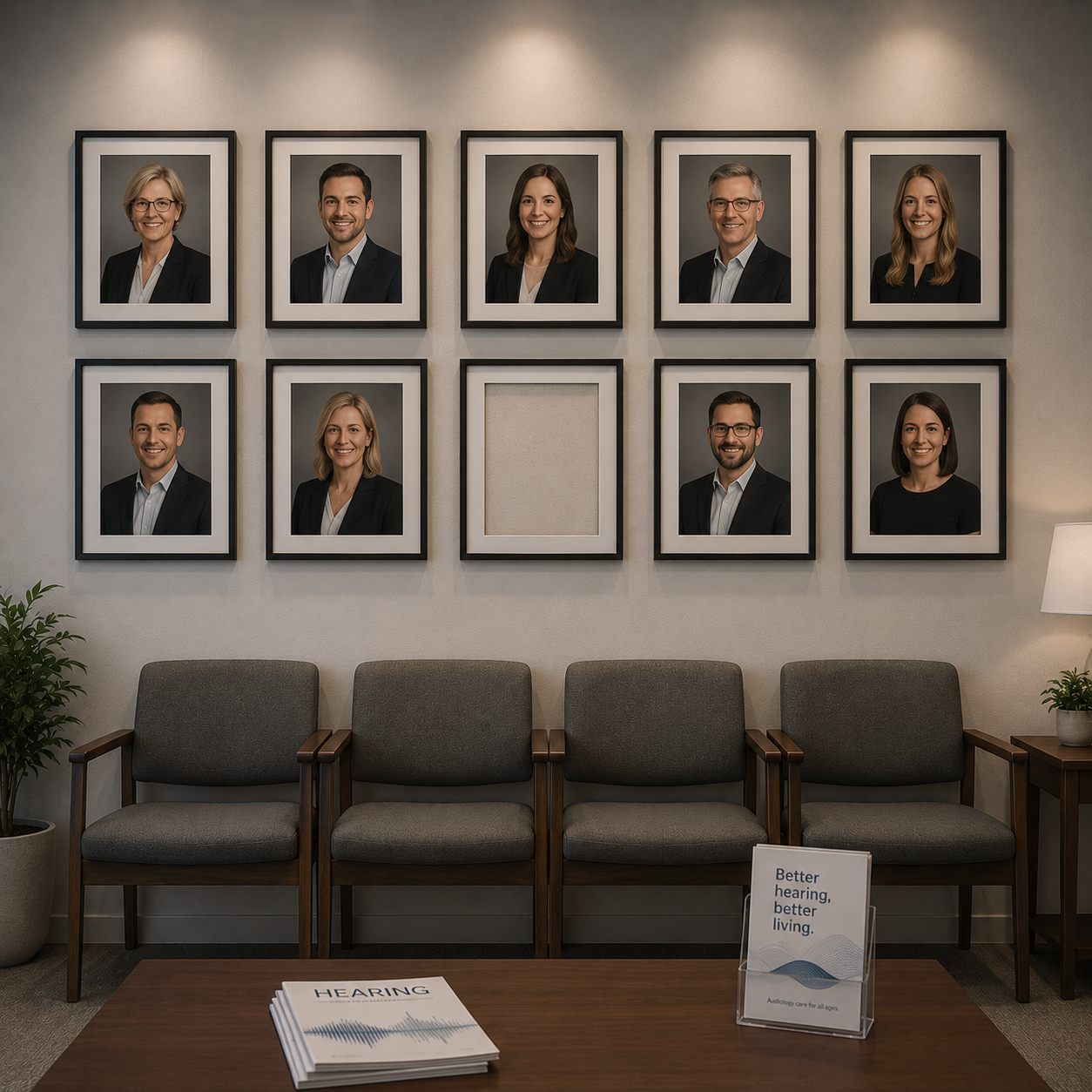
Sometimes the contradiction is so normalised that people stop noticing it.
I’ve noticed how often audiology services are designed around hearing professionals, despite supporting Deaf people every day.
Audiology is often presented as a specialist service for people with hearing loss.
But many people using audiology services are Deaf children, Deaf adults, Deaf parents, and Deaf families.
People who use BSL.
People who need language access.
People whose experiences extend beyond hearing levels and technology.
Yet many audiology spaces remain organised around hearing norms.
Spoken communication is often treated as the default.
BSL access is often added through interpreters or written communication.
Deaf representation can feel limited.
And Deaf people are often expected to adapt to systems that were not designed around them.
This creates a contradiction.
The service exists to support Deaf people.
But Deaf perspectives are not always central to how the service is designed, delivered, or understood.
The issue is not whether hearing professionals can provide good care.
Many do.
The issue is that Deaf experience often remains peripheral within a service that should understand Deaf people deeply.
When representation is absent, certain assumptions become invisible.
Hearing becomes the default.
Technology becomes the focus.
Communication becomes something to accommodate rather than something to centre.
Deaf culture is often overlooked altogether.
This matters because healthcare is not only about clinical expertise.
It is also about trust.
Understanding.
Communication.
And feeling recognised within the spaces designed to support you.
Imagine an audiology service where Deaf professionals were visible throughout the workforce.
Imagine BSL fluency being valued rather than exceptional.
Imagine Deaf culture being understood as part of professional competence, not an optional extra.
Audiology should not require Deaf people to navigate hearing-centred systems in order to receive support.
If a service exists for Deaf people, Deaf perspectives should help shape it.
Not sit at its edges.